Sunday, 26 January 2014

The Problem With Blockbusters, Part 3

Problem #3: Where's the villainy?
Every good blockbuster needs a good villain. No, scratch that - every good blockbuster has a great villain. A great villain isn't just a faceless nobody. A great villain has personality. A great villain is (often, but not always) a dark mirror of the protagonist. A great villain  can take the hero's quips and toss them right back, and terrorize  the audience, even as we can't wait to see what they'll do next.

A great villain makes a movie memorable, and they help define the protagonist by virtue of their villainy.  John McClane has Hans Gruber. Batman has the Joker (in two excellent and wildly different incarnations). Sarah Conner has the Terminator. Neo has Agent Smith. Luke Skywalker has Darth Vader (who is pretty much the template for an amazing villain).

But lately, big blockbusters have been sorely lacking in the villain department. 

Sometimes it's because they have no personality, nothing to make them unique. They're generic to the point of being caricatures or clichés. 

Sometimes it's because their villainous motives are muddy, and their characters are ill-defined. 

Sometimes it's because they're not actually good at being bad. 

Sometimes it's because they're just. Not. Scary.

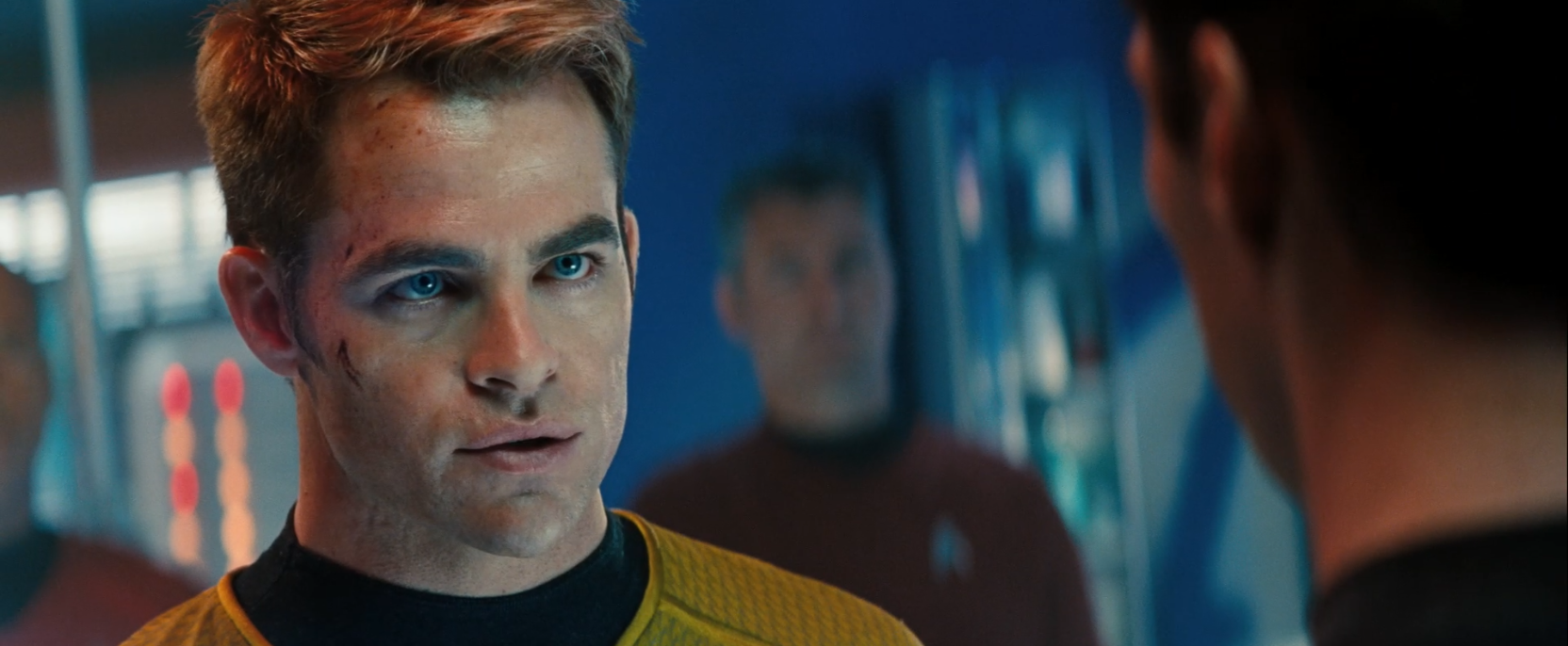
Take Khan in Star Trek Into Darkness. He's the almost-but-not-quite exception to this list. The film-makers tried really hard to make Khan cool and scary and complex, and Bendedict Cumberbatch delivered the charm and menace with his typical aplomb. But the Khan of J.J. Abrams' movie was nowhere near as compelling as Ricardo Montalban's iconic, scenery-chewing performance.


is not as scary as


Khan suffers from the problem of being an ill-defined character. At the beginning of the film, we hate him - he blew up a bunch of people! He killed Pike! That makes him bad! Then we find out that he had a pretty good justification (Starfleet held his crew hostage and kept him prisoner so they could build futuristic WMDs) for killing all those people, and as an audience, we're on his side again. Then, for no discernible reason, and with no discernible plan, he turns evil again just so the film can have a climax. 

This goes against his characterization as a tactical genius, and furthermore, it's a difficult pill to swallow because at no point in the film does Khan do something completely evil. He displays no taste for sadism or callous brutality. All the people he kills or attacks, he has good reason to do. The only reason we have to believe that he's actually a bad guy is that Old Spock tells us he is. Which is breaking the #1 most basic rule of storytelling - SHOW, DON'T TELL. 

By contrast, Montalban's Khan:

a) Has a clear motive that drives his character (Revenge against Kirk.)
b) He has a unique characterization (his love of Moby Dick) including tragic flaws (obsession, arrogance)
c) is, even with his understandable motivations, evil, and the film shows us. He takes sadistic pleasure in forcing the awful mind-worms on Chekov, and rather than kill his nemesis, as he famously tells us:

"I've done far worse than kill you, Admiral. I've hurt you. And I wish to go on hurting you. I shall leave you as you left me, as you left her; marooned for all eternity in the center of a dead planet... buried alive! Buried alive…!"

Even so, Star Trek Into Darkness has one of the better villains of the summer. Here's a brief rundown of the other offenders.
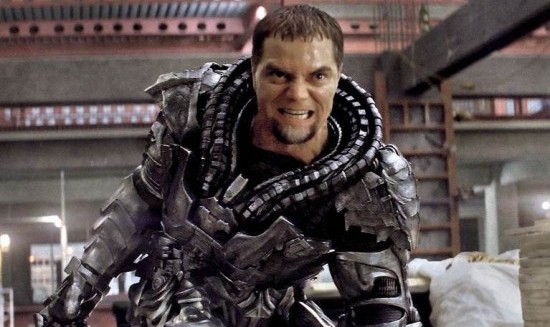


Man of Steel's General Zod: A thinly characterized one-dimensional space Hitler. He has no memorable personality beyond screaming and bugging his eyes. He has only the vaguest and most nebulously defined goals of rebuilding Krypton and achieving genetic purity and getting revenge on Jor-El by beating up his son, all of which serves to make him so boring that I don't care who he kills, or how many buildings he knocks down.


Elysium had Jodie Foster playing Rich White Jerk #1. The only thing that made her character at all remarkable is that she was a woman. If you replaced her character with a man, the film wouldn't change at all. But it wouldn't really change if you replaced it with a piece of wood either. The only concession to giving her a unique quality is her frankly ridiculous accent. Sharlto Copely brings the crazy, but despite how cool he looks and sounds - he's not a very effective villain.


The Wolverine had way too complex a plot, including a multitude of ill-defined villains. Viper was the clichéd femme fatale, Yuriko's father (whose name I can't recall, which is already a bad sign) is the clichéd evil father, and the film's ultimate villain is the clichéd switcharoo, where the character you thought was good turns out to be bad all along. For no real reason except the film wanted a plot twist. And side-note - they completely mishandled a really badass villain, the Silver Samurai.

Once again, the summer's bright spot turns out to be Iron Man 3

MASSIVE SPOILERS TO FOLLOW


Okay, you were warned. 

So, part of the charm of Iron Man 3 is the fact that writer/director Shane Black gave us a throwback to the action movie heyday of the 80s and 90s. And one of the things even bad action movies of that time did well was memorable, over the top villains. Iron Man 3 does the same.


First of all, the Mandarin. The Mandarin is built up as a deadly threat, to the point where I was really, really anticipating his inevitable showdown with Iron Man. Of course, part of the genius of the film is that we only get glimpses of The Mandarin, just like the shark in Jaws. Black gives us lines like "No talking and no eye contact unless you want to get shot in the face" to sell us on the idea that this guy is a dangerous psycho, and we see him casually presiding over atrocities and making cold-blooded speeches about murdering people. The Mandarin is established as having a clear goal (the overthrow of the United States and the murder of the U.S. President), having a personality (kind to children, speaks in parables, doesn't like being looked at, Chinese iconography), and being irredeemably evil (kills multiple innocents to prove a point). All of which makes him memorable and scary. So Iron Man 3 has got itself a wonderful villain.

Except of course, Ben Kingsley's Mandarin is a fake. That's right. Iron Man 3 satisfies all the criteria for a great screen villain - and he's not even the real bad guy.


The real bad guy is Guy Pearce's character, Aldritch Killian, and guess what? He also satisfies all the criteria of villainy. His goals are the same as the fake-Mandarin's, plus getting Pepper Potts as his trophy and one-upping or killing Tony. He has a personality - even an honest to goodness character arc. He goes from being bullied and ignored by Tony Stark to reinventing himself as a ruthless amoral arms dealer. And he's funny! Some of his quips are just as good as Tony's. (I especially love his exasperated "Pepper, please." while he's holding her against a wall by her throat, she's struggling to get free, and he's just trying to carry on a conversation.) Not only is he funny, but he is evil and we see him being evil. He casually murders Rebecca Hall's character when she starts mouthing off, he taunts Tony when they both believe Pepper to be dead, and he poses a serious threat to Tony in a fight. Furthermore, he's a dark reflection of Tony Stark without being just another guy in a metal suit. He's a great, memorable, menacing villain. 

Hell, even the "sub-bosses" of the movie, the other Extremis soldiers, are memorable villains, with personalities that distinguish them from the generic cannon fodder baddies. They aren't just faceless props in a set piece. 

Regrettably, Iron Man 3 is the exception, rather than the rule. It should be obvious, but it's not (apparently) - having a great villain is key to having a successful blockbuster.

Monday, 20 January 2014

The Problem with Blockbusters Part 2

Problem #2: The Character has an unsatisfying or unearned arc.

This is definitely related to the first problem, but in some ways, it's even worse.

A character with no arc is boring. A character with an unsatisfying arc is either baffling or infuriating.

What do I mean when I say an "unearned" arc? I mean that the character goes through an emotional change in the film (or the audience is meant to believe they did) but that emotional change is not supported by the surrounding narrative.

My prime example of this is the character of Captain Kirk in Star Trek Into Darkness.


Now, in the first Star Trek, Kirk has a nice arc. He believably goes from a directionless thrill-seeker into the de-facto Captain of the Enterprise, and (with some coaching) manages to form an unlikely friendship with Spock.

In Star Trek Into Darkness, the theme that screenwriters Alex Kurtzman and Roberto Orci are trying to get across is how the crew of a ship is like a family, and how a captain must put his crew/family above himself. This is (clumsily) reflected in the film's villain Khan, and it is emphasized in a few key scenes involving Kirk, especially his "heroic sacrifice" in the third act. Kirk is meant to transform from a somewhat reckless starship captain into a selfless hero.

However, this emotional change rings hollow. The film opens with a scene where Kirk rescues Spock (and jeopardizes the Prime Directive in doing so.) Kirk puts his career on the line to save his friend. So, if his journey is supposed to be one towards selfless heroism, he doesn't really have far to go. He's already heroic and selfless. Then, Kirk is spurred to reckless action by the death of his mentor, Admiral Pike. For the next hour of the film, his motivations are apparently revenge. It's only at the climax of the film that the theme of selfless heroism rears its head. 

SPOILERS AHEAD

When the Enterprise's warp core has been damaged, Kirk selflessly enters it himself and repairs it at the cost of his own life by radiation poisoning. He lives just long enough to say a tearful goodbye to Spock. This should be an emotionally powerful moment, but it rings hollow for two reasons:


1) Plot holes. Why, aside from convenience and thematic relevance, is Kirk the one to fix the reactor? There's a whole ship's worth of engineers, any one of whom is more qualified to fix the damn thing than Kirk. Why would Scotty waste precious time jawing with the captain instead of sending a team in to fix the damn thing?

Even leaving aside that plot hole, the more important problem, dramatically speaking, is that

2) Kirk's heroic sacrifice is meaningless.

This sacrifice is something we expect from Kirk because he's already proven himself, over the course of this movie and the one before, to be a take charge, morally upright character who is willing to make sacrifices for the greater good. It doesn't seem out of character for him, nor does it seem like a leap that he would do this. Now, if Kirk had started out the film as a captain willing to sacrifice his crew members' lives, and who had a change of heart - that would be a meaningful emotional change, but this is not. 

Furthermore, there aren't really any scenes in between the beginning and end of the film that explore or justify Kirk's character, so as a result he feels flat and underdeveloped. 

Last but not least - Kirk's death feels hollow because it's undone pretty much right away. Unlike the tragic death of Spock in Wrath of Khan (which Into Darkness slavishly imitates), Kirk's death is so impermanent it doesn't even last until the end of the movie. So he didn't actually sacrifice anything. 

And Kirk is not the only underdeveloped character. Khan suffers a similar fate, but in this case it's because the screenwriters put the audience through emotional whiplash regarding Khan. 


In the first half hour of Star Trek Into Darkness we are meant to revile Khan. It's revealed that he's murdered hundreds of people, and we see him kill at least one character (Pike) who we actually like. Then, at around the mid-point of the film, it's revealed that Khan's actions have been largely justified. He's been held hostage by an evil Starfleet Admiral, with his crew's lives at stake if he doesn't co-operate. These motivations actually seem pretty justifiable, and since Khan then teams up with the crew of the Enterprise to fight the evil Admiral, we the audience get on board with Khan. 

Then, at the film's climax, he turns evil again, essentially for no reason except that the original Khan was a bad guy in the Shatner/Nimoy timeline. Moreover, for a guy who we are told is a master of strategy and tactics - Khan doesn't seem to have any kind of plan except "shoot the Enterprise with my big scary ship."

His betrayal is supposed to be a shocking and frightening moment, but it rings false because we have been rooting for Khan for a large chunk of the movie. His betrayal comes out of nowhere - he has no real beef with Kirk or Spock. Furthermore (and most damning) we never see Khan do anything completely evil.

He blows up a Starfleet library and kills a bunch of faceless admirals - but that can be justified by his horrific treatment at the hands of Starfleet, and his desperation to rescue his crew.

He kills a bunch of Klingons (who are basically Star Trek Orcs in this film) and saves the heroes while he does it.

He kills Admiral Marcus, the evil warmonger who is responsible for Khan's incarceration.

Okay, sure, he smacks around Kirk and Spock, but that can be justified by self defence. 

The only evidence we have that Khan is evil is that Old Spock tells us so. Which is a) a massive cheat on the part of the writers and the characters, and b) sloppy writing. Pretty much the first axiom every writer is taught is show, don't tell. Which means that rather than telling the audience something is true, show them evidence of it and let them draw their own conclusions. If we saw Khan murdering the crew of the Enterprise or eating babies or something, we'd be much more willing to accept him as a villain. If we saw evidence of a dastardly scheme, we'd be much more willing to accept him as a master strategist.

Imagine how much stronger the film would be if Khan tricked the crew of the Enterprise into giving him back his crew, and then warped away, leaving Kirk and Spock to deal with the fact that they just unleashed the equivalent of Space-Hitler on an unsuspecting universe. It would show that Khan was a force to be reckoned with, rather than just asking us to believe one old guy with pointy ears.

This is just the most pertinent example from this summer, but it is certainly not the only example of a blockbuster with underdeveloped characters. 


Man of Steel also has this problem. Obviously the film-makers intended for Clark to have an arc, but I'll be damned if I can figure out what it is. He spends most of the movie moping around and brooding, and then hops into a blue and red spandex suit for not much reason. Regrettably, scenes of the character being angst-ridden do not a meaningful arc make. Now, if those scenes are strung together in a sequence, and we see the character's progression from one state of mind to another …

And don't get me started on the characterization of General Zod, who despite Michael Shannon doing his bug-eyed best, is utterly flat and boring, devoid of motivation or personality. 

It seems to me that a lot of these big summer tentpoles (especially the ones that are more 'written by committee) think that an audience is willing to sit by and accept these sorts of lacklustre characterizations. However, I don't think that's true, as Man of Steel performed under expectations, while Iron Man 3 (whose main character does have an arc) is one of the most financially successful films ever made. 

So, next time (which will follow a lot closer on the heels of this entry, we will be talking about

Insufficiently scary villains, which I feel is a HUGE problem in modern day blockbusters.

Monday, 6 January 2014

4 Problems with Summer Blockbusters, Part One

I love summer blockbusters. LOVE THEM. Jurassic Park, Raiders of the Lost Ark, Terminator 2, Star Wars (The Classic Trilogy), Aliens, Lord of the Rings, The Avengers - these are all very well written, well structured films that I can return to again and again.

Lately, with the proliferation of geek culture, every summer season makes me feel like a hobbit in a mushroom store. However, this past year, I was sorely let down. The slate seemed so promising: Thor: The Dark World, Man of Steel, Iron Man 3, The Wolverine, Elysium, Pacific Rim, Star Trek Into Darkness, among many others. However, looking back, the summer's offerings didn't measure up. At best, most of them were entertaining but ultimately forgettable. At worst, they insulted my intelligence as an audience member.

And looking back, these films had a lot of failings in common. For the next couple of weeks, I'll be talking about some of the issues that big Hollywood blockbusters are having that prevent them from being classics, and consign them instead to the scrap heap.

Note: Since this is a writing blog, I'm going to be talking mostly about problems with the story, characterization, structure and so on. We all know that shaky-cam is the worst thing to happen to action movies since Michael Bay, no need to belabour the point.

Problem # 1: The main character doesn't have an arc.

This is storytelling rule number one. In any story, in any medium, your character has to have a journey, and change in some fundamental way. In so many of these films, the character doesn't have a significant emotional arc. They start the movie as one person, and they finish it not having significantly changed.

Take Thor for example. At the start of The Dark World he's a prince of the Nine Realms who doesn't really want to be king when he'd much rather be dating Jane Foster. And at the end of the film, that's still his emotional state. The argument could be made that it is his struggle between kingly responsibility and selfish desire that is his journey - but he doesn't visibly struggle with that at all. He doesn't actually struggle with much.


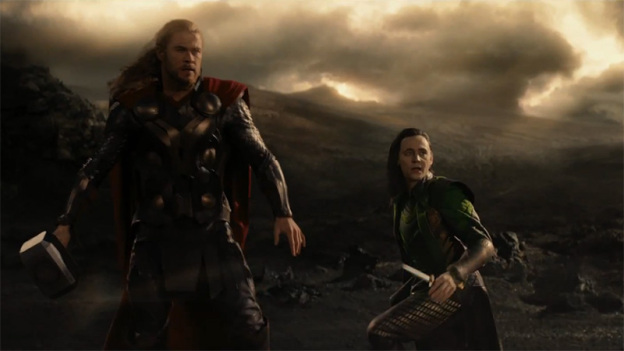
The only emotional change Thor goes through is grieving for his mother with Loki. Which just goes to show that good as Chris Hemsworth is, he really shines when acting opposite Tom Hiddleston, but that's because in those scenes, he actually has emotions to play (beyond nobility and scowling). And even in the 45 minute chunk of Thor: The Dark World where Loki is featured, I'd argue that Loki's emotional arc is more significant.

Thor is by no means the only hero without an arc - he's just the most recent example to my mind. Certainly Elysium had the same problem. Many films this summer had a related problem - the unearned emotional arc, which I will be talking about in a future instalment.


One film this summer that did succeed in giving the character an emotional arc, is Iron Man 3. The ever-lovable Tony Stark is dealing with separate but related personal crises in the film (apart from the fiendish plot of the Mandarin.) He's suffering from anxiety attacks (possibly even PTSD) after his adventure and near-death with the Avengers. As a result, he's channeling his feelings not into delicious pie (which most of us do) but into building an arsenal of Iron Man armours. These armours are a not-too-subtle metaphor for the way Tony is shielding himself from his feelings rather than dealing with them. As a result, he's alienating the people closest to him (Pepper, Happy, Rhodey).


Tony only comes to realize this after he's been literally stripped of his armour and forced to survive on his wits (with the help of a precocious youngster.) At one point in the film, he has a panic attack when he hears his armour isn't going to be ready to help him take down the Mandarin, and the kid tells him: "You're a mechanic, right? So build something." This a) gives Tony the impetus to build some improvised gadgets and storm the Mandarin's lair and b) reminds the audience that this is, in part, Tony's problem in the first place - he resorts to building things rather than confronting his fears.

By the end of the film, Tony has concluded that he doesn't need the armour to be a hero. In fact, the armour was a crutch, a symptom of his larger emotional baggage. So at the end of the film, as a Christmas present to himself and Pepper, he blows up his arsenal of armours, and removes the shrapnel from his heart, signifying he no longer needs to rely on his technology to be Iron Man. He starts out in one emotional place, and ends up at another.

Not that hard, right? Except apparently it is, because I'm at a loss to think of another blockbuster this year that had a protagonist with an arc. Give me your thoughts in the comments!

*Honorable mention to The World's End, which is probably my second-favourite movie of the summer, and which features Simon Pegg in a very emotionally honest performance, arc and all. However, I am hesitant to name it a 'blockbuster'.


Sunday, 5 January 2014

How Things Are Going To Be

So, as part of my New Year's Resolution, I resolved to revitalize this blog, and contribute to it weekly. I'm sure you, my loyal audience have been eagerly awaiting my return.

*Crickets*

Anywho, I'm also refocusing the blog. Those posts I've already made will remain for posterity, but going forward I feel it would be helpful for myself and for others if we all had some idea what to expect.

So, I'm aiming to post one or two times a week, and on the following themes:

1) My own work. This might include short sections of previous works, or original flash fictions or poems. (Nothing to lengthy - who has the time!?) Eventually, if there seems to be an audience for it, maybe I'll post a writing exercise (good writing exercises are very hard to find) and any of you who want to work at it along with me can do so!

2) Thoughts on other people's work. This might take the form of reviews or short essays, or both. I'll talk about whatever things strike my fancy - so probably comics, movies, and fiction, and almost certainly that'll be scifi, fantasy, horror or some other genre fiction beast.

3) I'll talk about my progress in the writing world, career wise. So far, not much - but that's because all the progress is happening on my end, as I hammer and chip away at Book the First.

Anywho, that's the goal. Let's get to it!